For centuries, delivering help to civilians caught in war has been difficult and dangerous. Before powered flight and modern aviation, aid reached people mainly by land convoys or small boats, which could be blocked by combat, weather, or destroyed infrastructure. In the 20th century, airdrops from cargo planes became a critical method for delivering food, medicine, and shelter into remote or unreachable areas; these operations—ranging from bundle drops to precision parachuted pallets—were used during crises such as the Sahel droughts and the 1990s Balkan conflicts.
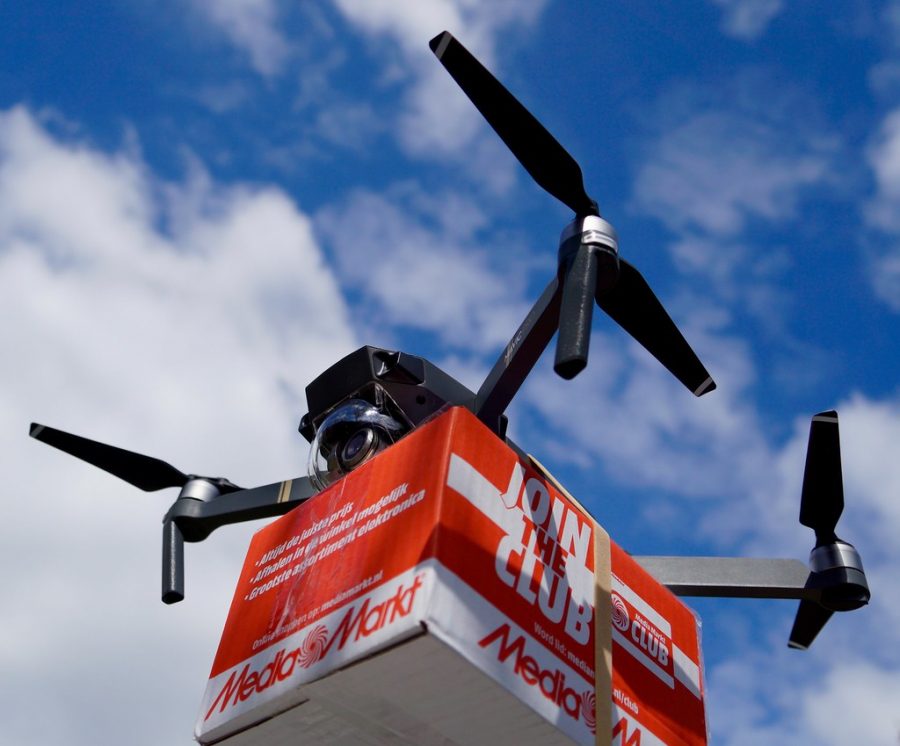
Drones have reshaped how aid can reach people on the ground, but their impact is mixed. Small, unmanned aircraft have proved valuable for rapid, targeted delivery of lightweight, time-sensitive items, such as vaccines, diagnostic samples, and emergency medicines, especially where roads are destroyed or manned flights are unsafe. At the same time, larger traditional airdrops remain indispensable for moving bulk food and shelter materials when ground transportation is available. However, the increase of armed and weaponized drones in recent conflicts has created new dangers The presence of hostile drones increases risks to aid convoys and personnel, and airspace that once might have been used for neutral humanitarian flights is now too dangerous, complicating delivery planning and increasing civilian risk.
Looking ahead, current trends suggest several ways drones could be used more effectively and safely to deliver aid in war zones. First, medical micro-logistics—networks of small cargo drones operating from secured supply hubs—could quickly deliver time-sensitive items (blood, antivenoms, test kits) directly to field clinics, reducing delays that cost lives. Second, integrating drones with real-time mapping, secure communications, and local partners can improve targeting and prevent supplies from falling into the wrong hands. Third, international rules, no-fly areas for humanitarian drones, and improved counter-drone and detection systems are likely necessary to protect both unarmed delivery drones and aid workers from armed drones and to allow safe ways for neutral humanitarian flights. To be effective, these technological advances must be matched by legal, ethical, and operational frameworks co-designed with local communities and humanitarian organizations.
In conclusion, drones are not a complete solution, but they are a powerful new tool in the humanitarian’s toolbox. Historically, aid depended on land convoys, boats, and large airdrops; today, drones add speed and precision for certain kinds of deliveries while also introducing risks because of weaponization and contested airspace. Future success will depend on combining drone technology with stronger protection measures, clear legal frameworks, local partnerships, and logistical systems that match the right delivery method to each need. Drones will make aid delivery more complicated, but also more advanced in future conflicts.
Works Cited
Aggarwal, S., et al. (2024). Drone-based medical delivery in extreme conditions. https://bmjpublichealth.bmj.com/content/2/2/e000894
Air & Space Forces Magazine. (2024, April 5). Airdrops to Gaza: The art and science of one method of humanitarian delivery. https://www.airandspaceforces.com/usaf-gaza-humanitarian-airdrops-bts/
Insecurity Insight. (2025, January). Hovering threats: The challenges of armed drones in humanitarian contexts. https://insecurityinsight.org/
VillageReach. (2024, June 19). Drones deliver humanitarian and health supplies across Africa. https://www.thinkglobalhealth.org/article/drones-deliver-humanitarian-aid-africa
World Food Programme. (2025, August 20). Humanitarian airdrops: Can life-saving food fall from the sky? https://www.wfp.org/stories/airdrops-humanitarian-emergency-un-world-food-programme-sudan-syria.
Johns Hopkins Center for Global Digital Health Innovation. (2024, August 19). Digital tools transforming humanitarian aid. https://publichealth.jhu.edu/center-for-global-digital-health-innovation/august-2024-digital-tools-transforming-humanitarian-aid