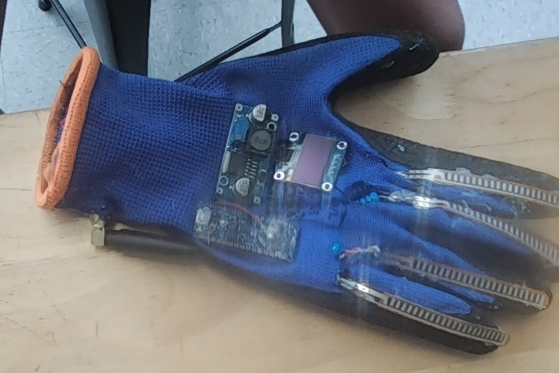
Imagine not being able to speak clearly enough for others to understand you. For many people with speech or hearing impairments, everyday conversations can be difficult and frustrating. Engineers are working to solve this problem through innovative assistive technologies, including the Gesture Hand Glove. This smart device can recognize hand movements and translate them into text or speech, helping people communicate more easily and independently.
The Gesture Hand Glove is designed to do much more than translate hand gestures. Using sensors placed on the fingers, the glove can detect specific movements and convert them into messages that can be sent to caregivers or displayed as text. Some versions can even produce spoken words. In addition, the glove can be connected to smart home systems, allowing users to control lights, fans, and other appliances with simple hand motions. Certain models also monitor heart rate and can alert caregivers if a health problem is detected.
Devices like the Gesture Hand Glove offer many benefits, but they also have some challenges. The greatest advantage is that they help people who are nonverbal or have severe speech impairments communicate more effectively. This can increase independence, confidence, and social interaction. However, the technology is not perfect. If a gesture is interpreted incorrectly, communication errors can occur. Some experts also worry that users could become too dependent on the device instead of practicing other communication methods. Even with these concerns, the benefits often outweigh the drawbacks.
The idea of assistive communication technology is not new. Earlier devices were often expensive, bulky, difficult to carry, and slow to use. Many systems also struggled to recognize the unique movements and grammar of American Sign Language (ASL). Engineers have worked to improve these limitations by creating gloves that are more comfortable, accurate, and affordable. Research continues to improve gesture recognition, making these devices more practical for everyday use. Some newer designs even provide feedback to users, helping them interact more naturally with technology and other people.
The impact of gesture communication gloves extends beyond communication alone. These devices can also support physical therapy by tracking finger movements and grip strength. This makes them useful for people recovering from injuries, strokes, or nerve disorders. By combining communication assistance, health monitoring, and rehabilitation support into a single wearable device, the Gesture Hand Glove demonstrates how engineering can improve lives. As technology continues to advance, smart gloves may help even more people overcome barriers, gain independence, and participate fully in their communities.
References:
- https://www.innocaption.com/recentnews/the-intersection-of-ai-and-hearing-accessibility#:~:text=Real%2Dtime%20captioning%20apps%20like,fully%20engage%20with%20the%20material
- https://digitalcommons.odu.edu/cgi/viewcontent.cgi?article=1037&context=vmasc_pubs#:~:text=The%20AAC%20devices%20were%20extremely,the%20skills%20to%20use%20them
- https://mn.gov/deaf-hard-of-hearing/assistive-technology/apps/#:~:text=Speech%2Dto%2Dtext%20apps%20can%20be%20useful%20for%20short%2C,**Font%20sizes**%20Whether%20font%20sizes%20are%20adjustable
- https://newsroom.ucla.edu/releases/glove-translates-sign-language-to-speech#:~:text=Wearable%2Dtech%20glove%20translates%20sign,%2C%20numbers%2C%20words%20and%20phrases
- https://www.instructables.com/Gesture-Communication-System/