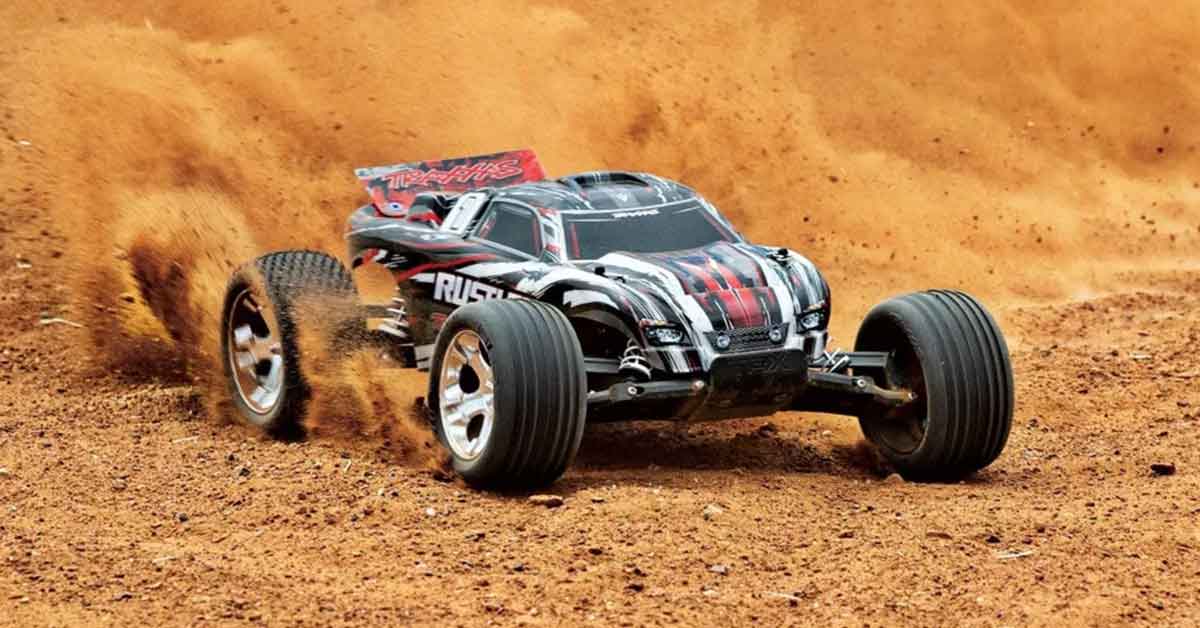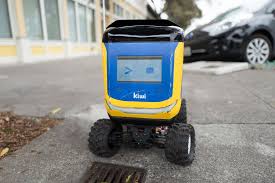
Homeless and disabled people are struggling to receive or obtain consistent food and water, which is one of the reasons that causes global hunger. Our solution, an electric-powered RC-Car, will solve this problem by delivering daily meals to people in desperate need of them. Our RC-Car is more sustainable and efficient than companies like DoorDash and Uber-Eats by saving thousands of gas (one giant factor in global warming), and reliant, quick delivery.
In the research paper “Toward Fully Autonomous Last-Mile Logistics: A Case Study With a Safety-Boosted Self-Driving Delivery Robot” published in IEEE Access, the authors demonstrate the potential of engineering small-scale, custom autonomous rovers built with intelligent flight controllers to automate localized logistics. The case study details how these delivery vehicles use advanced global positioning systems (GPS) to navigate complex urban paths and coordinate real-time tracking to specific coordinates. By testing the vehicles across diverse community terrains—including concrete, landscape paths, and grass—the research serves as a technical proof of concept highlighting the practical feasibility of using small-scale, specialized autonomous rovers for targeted delivery tasks.
The use of this technology has significant positive impacts on the environment by utilizing electric power instead of gas-powered delivery vehicles, thereby reducing carbon emissions. Socially, it offers a crucial way to reach vulnerable populations, such as disabled individuals, without the high operational overhead and labor costs of traditional delivery networks. However, negative impacts currently include safety risks; without advanced pedestrian-aware mechanisms, standard delivery vehicles can collide with obstacles or disrupt public pathways. Additionally, ensuring “food security” and cargo integrity during transit is a persistent issue, as open or poorly optimized vehicle chassis can leave food exposed to weather elements or prone to spilling during sharp turns.
Others have tried similar autonomous delivery solutions, such as large-scale commercial “sidewalk robots” deployed in major cities. However, these systems frequently struggle with complex obstacles, theft, navigation blockages, and getting stuck on uneven terrain. In the development team’s testing parameters, it was observed that high-speed delivery rovers often experience instability, tipping over, or “jackknifing” if the throttle and center of gravity are not tuned correctly for the terrain. We can learn from these engineering attempts that a successful delivery robot requires a highly stable suspension system, a lower center of gravity, and a securely enclosed, insulated compartment to keep food safe, intact, and sanitary.
Experts in autonomous systems suggest that for these vehicles to be truly safe and effective, they must be equipped with active environmental “eyes,” such as LiDAR or ultrasonic sensors, to detect and dynamically avoid moving objects and pedestrians in real time. They also recommend integrating high-precision GPS modules to ensure the vehicle stays within centimeters of its intended path. Our idea is a good solution because it combines the rugged, all-terrain capabilities of an RC truck chassis with an affordable autonomous controller, making it significantly more versatile than standard commercial sidewalk robots while remaining highly cost-effective for helping those in need.
References
- https://ieeexplore.ieee.org/stamp/stamp.jsp?arnumber=11213505
- https://www.focusireland.ie/our-services/homeless-services-in-dublin/food-service/
- https://pmc.ncbi.nlm.nih.gov/articles/PMC6130432/
- https://www.cdc.gov/foodsafety/keep-food-safe.html
- https://www.roboticstomorrow.com/article/2021/04/the-importance-of-suspension-in-delivery-robots/16631