Quantum computing promises huge advances, but for companies like Google and IBM, progress has been slowed by the difficulty of building reliable and scalable quantum hardware. A central problem is that the basic units of quantum computation, known as qubits, are extremely sensitive to environmental interference. Noise, temperature fluctuations, and stray electromagnetic fields can easily cause decoherence, meaning the delicate quantum state collapses and information is lost. This sensitivity makes current quantum machines error prone, expensive, and hard to scale, which in turn limits the new revelations we can expect from quantum computing. To solve this problem, researchers need qubits that remain stable under realistic conditions and control systems that keep them coherent long enough for meaningful computation.
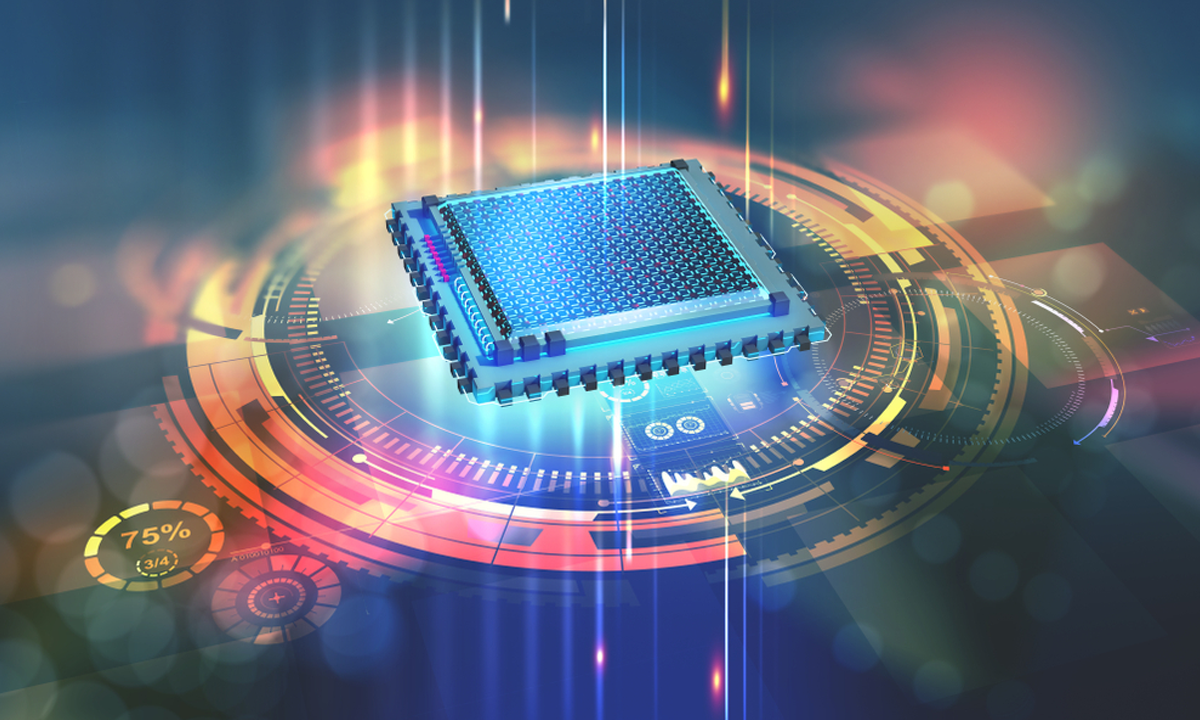
A promising path forward comes from Microsoft, which recently unveiled a new quantum chip called Majorana 1. Majorana 1 uses a topological core architecture built with a breakthrough class of materials known as topoconductors. This design could potentially support up to one million qubits on a single chip. Instead of traditional qubits, Majorana 1 relies on exotic quantum particles called Majorana zero modes. By encoding information in pairs of these particles and physically separating them, the design provides qubits with built in protection against environmental noise.
The advantage of a topological qubit is that it could dramatically reduce the error rate inherent in quantum computation. Because information is stored in a topologically protected way, random disturbances from the outside world are far less likely to destroy the quantum state. As a result, fewer physical qubits may be needed to create a single logical, error corrected qubit. In addition, the architecture is designed to be digitally controllable and scalable rather than relying on delicate analog control of each qubit, which becomes impractical at large scale.
If realized at scale, this more stable and scalable quantum hardware could have enormous impacts on society. Quantum machines with millions of qubits could revolutionize computing speeds for certain tasks, making breakthroughs possible in drug discovery, materials science, and artificial intelligence. These are areas where classical computers struggle to simulate complex quantum behavior. For example, quantum simulation of molecules could accelerate the development of new medicines or advanced materials, enable self healing materials, or lead to better catalysts for environmental cleanup. More stable quantum computations could also enhance artificial intelligence and machine learning when combined with quantum data processing, while enabling new advances in data security and cryptography.
Despite this promise, significant challenges and safety concerns remain. Although Microsoft claims to have demonstrated the necessary physics for topological qubits, the path to a fully fault tolerant and large scale quantum computer still involves many technical hurdles. These includes entangling large numbers of qubits, performing consistent operations, maintaining ultra low temperature environments, and scaling up manufacturing with atomically precise engineering. Furthermore, the potential of quantum computing to break modern cryptographic systems raises serious security and ethical concerns. In response, Microsoft has launched its Quantum Safe Program to collaborate with standards organizations on the development of quantum resistant encryption methods.
In conclusion, the sensitivity and instability of qubits has long been a major roadblock for quantum computing, limiting progress by companies such as Google and IBM. The emergence of topological qubits, particularly through Microsoft’s Majorana 1 chip, offers a compelling potential solution. By harnessing exotic physics and advanced materials, researchers may be able to build quantum computers that are stable, scalable, and powerful. If successful, the benefits could be transformative, ranging from advances in computing and artificial intelligence to breakthroughs in medicine, materials science, and data security. While the road ahead remains challenging, recent progress makes this future increasingly possible.
Sources
https://news.microsoft.com/azure-quantum/
https://www.sify.com/technology/microsofts-quantum-chip-majorana-1-marketing-hype-or-leap-forward/
https://www.sciencenews.org/article/microsoft-topological-quantum-majorana