Cars have changed society in huge ways. They let people travel farther than ever before, connect families and jobs, and help move goods across the country easily. In the early 1900’s, the automobile helped shape cities and brought many freedoms like going on road trips or living farther from school and work that we take for granted today. But as cars became more common, they also caused problems like pollution, traffic injuries, and environmental damage.
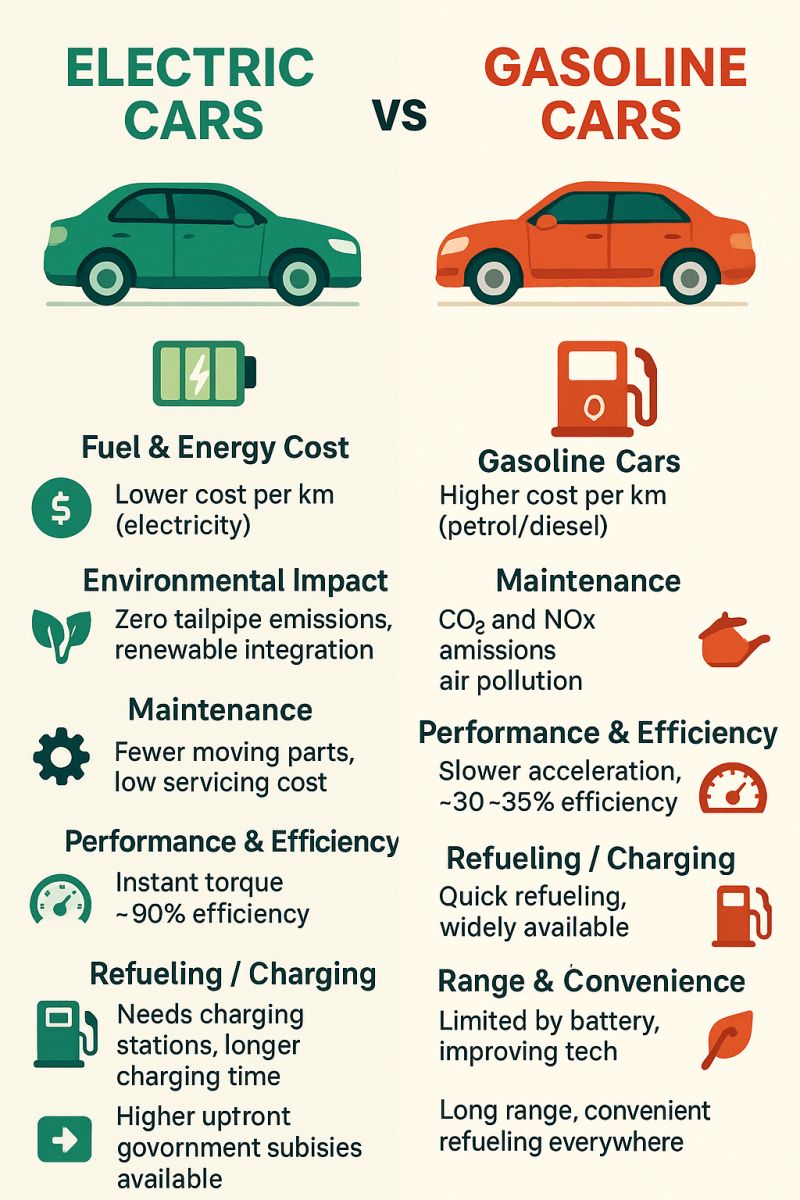
People have tried many solutions to cut the pollution cars cause. One of the biggest is electric vehicles (EVs), which don’t burn gasoline and therefore don’t produce harmful gases like nitrogen oxides or carbon monoxide. Experts say EVs produce fewer emissions over their lifetime than gas cars, especially as electricity comes from cleaner energy like wind and solar. Governments also set stricter limits on car emissions and offer incentives for EV purchases or charging stations. Other steps that help reduce vehicle pollution include driving less, carpooling, and improving public transit.
Not all solutions worked perfectly. Some plug-in hybrid cars, which are part-electric but still use gasoline, turned out to pollute almost as much as regular gas cars. Hybrid systems also struggled to deliver on their “green” promises because many drivers still relied heavily on the gasoline engine. Additionally, some emissions controls were defeated by technology tricks in the past — leading to real-world pollution far higher than test figures showed.
Experts highlight several risks. Pollution from cars contributes to smog and respiratory health problems, especially in crowded cities. Some studies show that heavier electric cars may increase risks in collisions because they weigh more. Another emerging concern is that very quiet EVs can be harder for pedestrians to hear, leading to accidents. Despite these issues, experts agree that zero-emission transportation, better public transit, improved safety technology (like automatic braking), and cleaner city planning are the most effective paths forward.
Cars bring pollution problems that warm the planet and hurt air quality, but they also give people freedom and convenience to go where they want when they want. Good car design includes features like efficient engines, strong safety systems (e.g., airbags, crash-resistant frames), and electric powertrains that reduce fuel use and improve health outcomes. Electric cars are also easier to maintain and can be charged at home, saving money over time.
Cars have shaped society in extraordinary ways — from revolutionizing travel to creating new environmental and safety challenges. While past solutions have had limits, today’s shift toward electric vehicles offers a strong solution to reduce pollution and protect public health. By combining electric technology, smarter policies, and thoughtful design, we can keep the freedom and convenience of cars without harming the planet. Cars won’t disappear, but how we power them and use them can evolve for the better.